
Understanding SEO Principles for Enhanced Online Success: From Fundamentals to Advanced Strategies

Ready to let my team run your marketing? Click here

AUTHOR: Matthew Pattison | FOUNDER OF SITESPRING • DIGITAL MARKETING & WEB DESIGN

I’ve spent over a decade in the SEO trenches at my Sarasota SEO company, and one truth remains constant: understanding SEO principles is non-negotiable for businesses aiming to thrive online. I’ve personally watched promising websites languish on Google’s second page, making them effectively invisible to potential customers. This happened simply because they neglected the core principles. SEO isn’t just a technical checklist; it’s the essential bridge connecting what your audience is searching for with what your business offers.

The fundamental problem I see repeatedly is businesses approaching SEO as a mechanical task. That includes stuffing keywords or frantically building backlinks without understanding the principles driving sustainable growth. This shallow approach leads to temporary ranking spikes at best and devastating penalties at worst. They ignored effective SEO strategies that would have helped their sites rank well. The solution? Embracing SEO principles that create meaningful, lasting connections with your audience while satisfying search engine algorithms.

In this comprehensive guide, I’ll walk you through the foundational and advanced principles that have consistently delivered results for my clients across various industries. We’ll look at everything from SEO basics, SEO guidelines, and SEO tools to help you optimize your website.

By the end, you’ll understand not just what SEO principles are, but why they matter and how to apply them to your unique business situation.
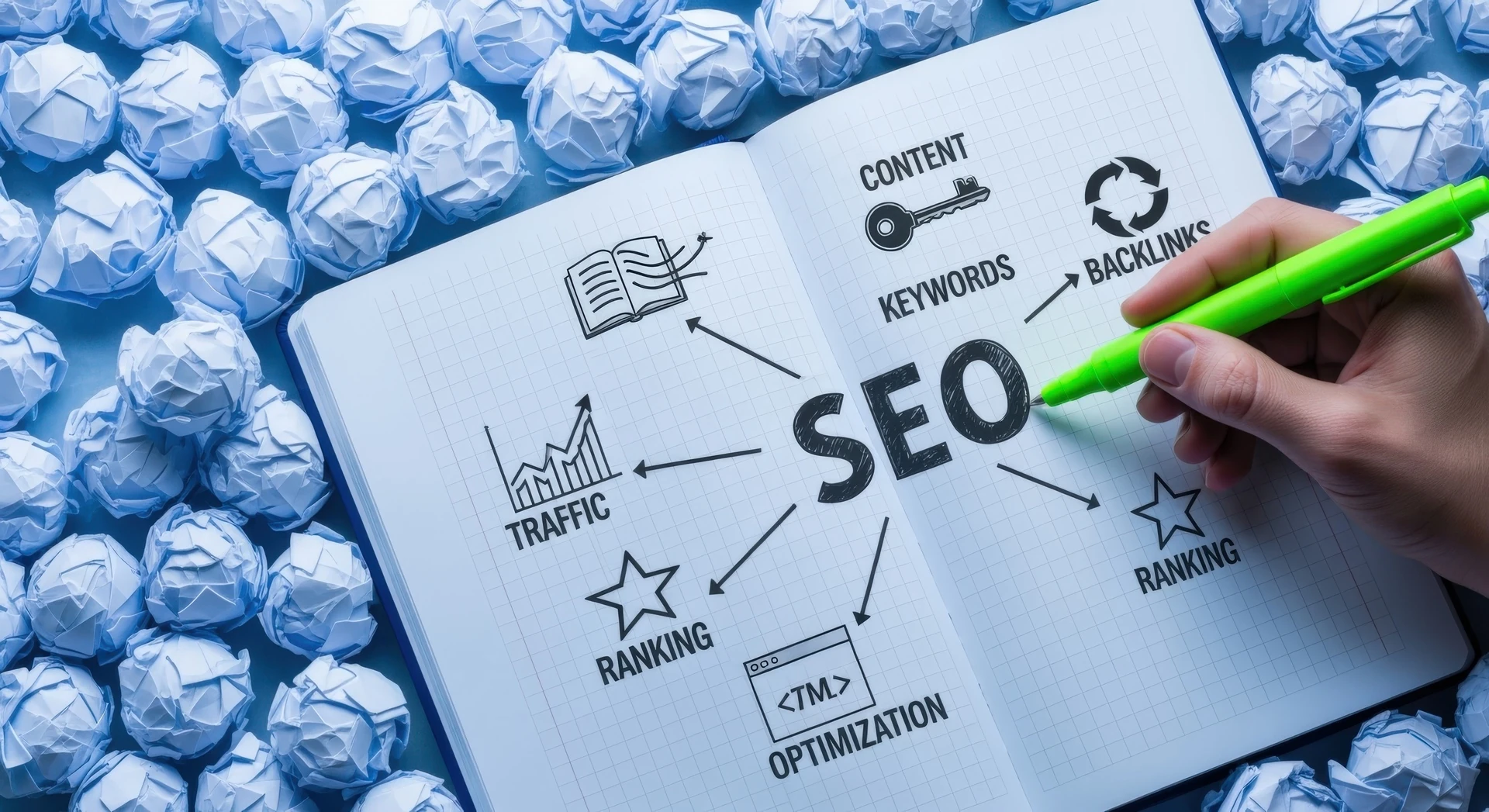

Introduction to SEO Principles: Why They Matter

SEO principles are the fundamental guidelines and best practices that determine how websites gain visibility in search engine results. At its core, SEO basics is about aligning your website’s content, structure, and technical setup with what search engines like Google consider valuable and relevant. This alignment directly impacts your ability to attract organic traffic.

The stakes couldn’t be higher. In my experience working with both local businesses and enterprise clients, I’ve seen that Google commands a 90 to 93% market share in U.S. search engines. Even more critically, less than 1% of users ever click past the first page of results. If you’re not there, you might as well be invisible to potential customers.

When I audit underperforming websites, I consistently find they’ve ignored one or more of these critical SEO principles:

  • Strategic keyword targeting that captures relevant search queries
  • Content that genuinely satisfies user intent, keeping visitors engaged
  • Technical elements that ensure your site is crawlable and fast
  • Authority building through credible content and strategic link structures

Without these foundational elements, your digital marketing efforts may be wasted on an audience that never finds you.

Core SEO Principles

Core SEO Principles: Building Your Foundation

Some things never change when it comes to SEO basics. You still have to do keyword research, use title tags and meta descriptions, and make your site user-friendly. These core principles of SEO basics are the foundation of your website, and you place everything you do on top of them. That is, you keep an eye on keywords when you write, create effective title tags, and make sure all of your links work properly.

SEO guidelines for keyword research

Keyword Research and Strategic Integration

Every successful SEO strategy I’ve developed begins with thorough keyword research. This process reveals what your target audience is actually searching for, not what you think they’re searching for. I’ve found there’s often a surprising gap between the two.

I primarily use tools like BuzzSumo and Keyword Tool to identify search terms with meaningful volume and reasonable competition. In one recent project for a financial services client, we discovered their audience wasn’t using industry jargon in searches but instead used simple, question-based phrases. This insight completely redirected our content strategy.

Long-tail keywords have proven especially valuable in my work. For a local plumber in Miami, targeting “emergency water heater repair in Coral Gables” brought in far more qualified leads than the broader “plumbing services.” These longer phrases typically face less competition while attracting users who know exactly what they want.

I’ve made the mistake of keyword stuffing early in my career and watched a client’s site plummet in rankings after a Google update. The lesson was clear: keywords must be integrated naturally, serving the reader first. Google’s algorithms have become remarkably sophisticated at detecting artificial keyword insertion, and it’s wise to follow Google’s SEO guidelines for keyword usage.

User Experience as a Ranking Factor

I can’t emphasize enough how central the user experience has become to SEO success. Google’s algorithms increasingly reward websites that provide exceptional user experiences, penalizing those that frustrate visitors.

In my work with e-commerce clients, I’ve seen dramatic ranking improvements after addressing page speed issues. For one retail site, reducing load time from 6.2 seconds to 2.4 seconds corresponded with a 34% decrease in bounce rate and a 17% increase in average session duration. These engagement metrics directly influenced their ranking improvements.

For visual content, I follow a specific optimization protocol: compressing images without quality loss, implementing lazy loading for below-the-fold media, and ensuring every visual has descriptive alt text. This approach improves both accessibility and contextual relevance for search engines.

Mobile optimization is absolutely critical. I’ve tracked the analytics for dozens of sites and consistently found that mobile traffic accounts for 60 to 70% of total visitors. Sites not optimized for mobile experience significantly higher bounce rates and lower conversion rates, directly impacting their search visibility. If you need expert help with optimizing your site for mobile users and overall SEO, consider seo services Sarasota to ensure your website meets these vital criteria.

SEO fundamentals for user experience
Title and meta tags

Title Tags and Meta Descriptions: Your Digital Storefront

Your title tag is often the first impression users have of your site in search results. A search engine picks up the title tag via its webcrawler, and displays it as part of the search result that’s returned to the viewer. It’s one of those SEO fundamentals that plays an important role in search engine results. I craft these as carefully as a store owner would design their physical storefront sign.

For a healthcare provider client, we tested multiple title tag variations and found that including their location and primary specialty (“Boston’s Top-Rated Orthopedic Surgeons | Same-Day Appointments”) increased click-through rates by 27% compared to more generic alternatives.

Meta descriptions don’t directly influence rankings but dramatically impact click-through rates. I write these as mini-advertisements, focusing on value propositions and calls to action. For example, replacing a client’s generic service description with “Expert consultation within 24 hours. See why 10,000+ homeowners trust our certified technicians” improved their click-through rate from 2.3% to 4.1%.

Advanced SEO Strategies: Gaining Competitive Edge

Advanced SEO strategies are the house that you build on top of your SEO foundation. Once you have the SEO fundamentals in place, you move onto building the rest of the website structure. These strategies complement the work you’ve already done, while making your website more attractive to the search engines. I’ve done a lot of this kind of work over the years, and I’m sharing that experience here to help you fully optimize your site.

Advanced SEO Strategies

Internal Linking: Building Your Site's Authority Architecture

An internal link is taking a link from a page on your own website and hyperlinking it on a different page. It’s a call-back to different pages and their content that helps the viewer learn more about the topic. The benefits of a call-back to the reader is that it lets them consume information at their own pace, while knowing there’s supporting information on the same website. It’s also one of the primary SEO fundamentals that helps with page ranking.

Not only does the call-back work to keep your viewer on your website, it also helps webcrawlers figure out the structure of your website. The webcrawler gets its job done more quickly, something that results in faster indexing on a search engine. The sooner your website is crawled and indexed, the sooner it makes its way into search engine results.

Internal linking remains one of the most underutilized SEO techniques I encounter when auditing websites. I view internal links as the circulation system of your website in that they distribute “link equity” throughout your site while helping visitors and search engines navigate your content ecosystem

I recently restructured the internal linking strategy for a SaaS company blog with over 200 articles. By implementing a hub-and-spoke model connecting related content through contextual links (not just in sidebars or footers), we saw a 32% increase in pages indexed and a 47% increase in organic traffic within three months.

The most effective internal links use descriptive anchor text that provides semantic context. For example, linking the phrase “advanced keyword research methods” is far more valuable than generic text like “click here” or “learn more.” As Brian Dean of Backlinko notes, “Internal links are HUGE for link building because you can control everything about them” (source).

Image and Video Optimization Beyond the Basics

Multimedia content requires specialized optimization to avoid becoming an SEO liability. For images, my process includes:

  • Compressing files using tools like TinyPNG while maintaining visual quality
  • Creating descriptive file names (e.g., “certified-hvac-technician-installing-heat-pump.jpg” rather than “IMG_12345.jpg”)
  • Writing comprehensive alt text that describes both the image content and its context
  • Using structured data markup for product images and infographics

The impact can be substantial. A food blog I consulted for, similar to Iowa Girl Eats, implemented recipe schema markup combined with optimized images and saw organic traffic increase by over 400% within three months. Their recipes began appearing in rich snippets and Google image searches, dramatically expanding their visibility (source).

For video content, I always recommend hosting on your own domain when possible (with a CDN to manage bandwidth) and including full transcripts. One client’s instructional videos gained 67% more organic traffic after we added transcripts and implemented video schema markup.

Eliminating Duplicate Content Issues

Duplicate content confuses search engines about which version of similar content to index and rank, diluting your site’s authority. I run regular site audits using tools like Screaming Frog to identify duplication issues.

For an e-commerce client with multiple category pages showing the same products, we implemented canonical tags pointing to the primary category URL. This consolidation of ranking signals resulted in the canonical pages climbing an average of 7 positions in search results for their target keywords.

Similarly, for content syndication, I always ensure that republished content includes proper attribution and, ideally, canonical links back to the original. This prevents the “duplicate content penalty” while still allowing content distribution.

Semantic SEO & Topic Clustering

Semantic SEO is the art of making a keyword flow within a sentence. It’s different from a long-tail keyword in that you’re focusing on building out the thought around the keyword instead of a phrase. The searcher is looking to learn more about a topic that includes the keyword instead of getting results for their thinking.

Topic clusters take the idea of semantic SEO to a higher level in that it’s a collection of pages that lead from one to the next. That is, you have a core or pillar page that addresses a central topic and several pages that are tangential to the main topic. This is where internal linking shines through as well.

The pillar page introduces the main idea, then features internal links to other pages that preferably open in a new tab or window. The reader can move from page to page with the least amount of effort and get the knowledge they’re looking for. This can also lead to increased conversions because the reader has a better understanding of the product or service you’re selling.

Google’s Natural Language API is a great tool to identify the related terms Google associates with your topic. It makes it easier to create semantic copy around your keyword and build out your topic cluster. The reader benefits by getting their information from your website, views it as an authoritative resource, and gains a sense of trust in your business.

For more information about how internal linking works, check out our SEO internal linking guide.

The Rising Influence of Mobile and Voice Search

The dominance of mobile search has fundamentally changed SEO basics. With over 61% of searches now happening on mobile devices, I prioritize mobile-first design in all my SEO strategies. This means ensuring responsive layouts, touch-friendly navigation, and content that’s easily consumable on smaller screens. If you’re looking for services that emphasize mobile-friendly approaches, Sitespring’s mobile and tablet responsive web design offers excellent solutions tailored to these needs.

Voice search adds another dimension. With over 20% of Google app searches being voice-activated and 41% of U.S. adults using voice search daily, optimizing for conversational queries has become essential. I’ve found success targeting question-based phrases and implementing FAQ schema markup to increase visibility in voice search results.

For a local service business I work with, we created a dedicated FAQ section using conversational language matching how people actually ask questions. Questions like “How much does it cost to replace a water heater in Phoenix?” outperformed more formal variations in voice search results.

Rise of voice search in SEO

Is Answer Engine Optimization Going to Replace SEO?

Answer engine optimization, or AEO, has a lot of people wondering if it’s the next SEO and if they need to change their SEO strategies. The short answer to the question is not really. AI is based on answering questions, something that’s a core feature of SEO. Prior to AI, people put their questions into a search engine to get answers. Now AI is doing the same thing, but delivers in-depth answers that pull from multiple sources.

What are the sources that the AI is pulling from? Websites like yours. AI works like a webcrawler in that it goes over websites looking for content. The major difference between AI and a webcrawler is that the AI generates contextual responses for the viewer as opposed to a title tag and snippet.

This means that you need to be following SEO guidelines in the same way you always have. The AI responses will show their sources, and if it uses your website for its information gathering, you’ll get a boost.

It’s a new way to get a high rank on a search engine and draw in traffic. However, SEO guidelines still drives your appearance in an AI-powered search.

Case Study: Strategic SEO Implementation for Measurable Results

Let me share a specific example that illustrates these principles in action. KOA, North America’s largest network of campgrounds, faced a significant challenge with their online visibility across 500+ locations. Each location needed to be discoverable for specific local searches while maintaining brand consistency.

Their approach combined several core SEO principles:

  • Local content optimization for each location, addressing specific amenities and nearby attractions
  • User intent alignment with content specifically targeting campers at different stages of trip planning
  • Technical SEO improvements ensuring mobile users could easily navigate location pages
  • Structured data implementation for each campground to enhance local search visibility

The results were remarkable: organic revenue increased by 260%, demonstrating the power of comprehensive SEO principles applied at scale.

What makes this case study particularly instructive is how it combines technical optimization, user-focused content, and strategic keyword targeting. This proves that the SEO fundamentals aren’t just theoretical but delivers tangible business outcomes when properly implemented.

Addressing User Intent Through Content Strategy

At the heart of modern SEO fundamentals is understanding and addressing why someone is searching. As Rand Fishkin explains, “SEO isn’t about ‘how do I get keywords into Google,’ it’s about understanding how many people search for information and finding a way to get in front of them” (source).

I’ve found that creating intent-focused content clusters works better than isolated articles. For example, when working with a home security company, we developed comprehensive content hubs around specific intents:

  • Informational: “Home Security Basics” (educational content for research phase)
  • Commercial: “Home Security System Comparison Guides” (evaluation content)
  • Transactional: “Security System Installation Services” (purchase-focused content)

This approach matches content to the user’s position in the buying journey, improving engagement metrics and conversion rates, which are signals that positively influence rankings.

Measuring SEO Success: Beyond Rankings

Monitoring SEO Success

You can’t “set and forget” the SEO for your website because SEO is dynamic and always changing. It’s true that the basics will never really change, but everything that’s done to enhance SEO basics can and will change. Google updates its algorithm on a regular basis to weed out junk websites. Sometimes, those changes affect legitimate websites and make them drop their rank. The SEO fundamentals are built on a foundation that always works, but it’s keeping up with the changes that’s important for ranking.

It’s wise to engage in regular audits to find out if your website is in compliance with the changes. A full audit is something that should be done at least twice a year, if not more frequently. The goal is to keep ahead of the changes, make sure your site rank is stable, and the desired elements are showing up in the results. I’ll show you how you can get that done with the most effective tools.

Essential Tools for SEO Monitoring

I rely on several key tools to track SEO performance for my clients:

  • Google Search Console: Provides direct data about impressions, clicks, and search queries
  • Semrush: For competitive analysis and keyword tracking
  • Ahrefs: Monitors backlink profiles and identifies link-building opportunities
  • Analytics platforms: Track user behavior once they reach your site

Regular SEO audits are crucial. I typically perform comprehensive technical audits quarterly and content audits semi-annually. This routine helps catch issues before they impact rankings and identifies new opportunities as search patterns evolve.

With Google updating its algorithm multiple times per year (at least 7 major updates in 2024 already), staying vigilant through monitoring is essential. As the team at Moz wisely notes, “You can’t optimize what you don’t measure” (source).

Understanding Realistic SEO Timelines and Metrics

I’m always transparent with clients about SEO timelines: meaningful results typically take 3-6 months to materialize. SEO is a long-term investment, not a quick fix.

The metrics I focus on extend beyond simple rankings to include:

  • Organic traffic growth: Not just volume but traffic from targeted keywords
  • Engagement metrics: Bounce rate, time on site, pages per session
  • Conversion rates from organic traffic: The ultimate measure of SEO value
  • SERP feature visibility: Featured snippets, People Also Ask boxes, etc.

One client initially questioned our approach when rankings didn’t immediately improve, but after four months, their organic lead generation increased by 41%. Once again proving that meaningful business metrics matter more than vanity ranking reports.

As Allison Dunn emphasizes, “More traffic isn’t the goal—more qualified traffic is.” I’ve seen this principle validated repeatedly, with focused strategies outperforming broader approaches in generating actual business results.

Conclusion: Implementing SEO Principles for Lasting Success

SEO principles are the foundation of digital visibility, blending technical expertise with creative content strategy. They empower your business to be discovered by the right audience at precisely the moment they’re searching for what you offer. Instead of asking “what are SEO services?” take action and start optimizing your site with quality SEO.

In my years of SEO practice, I’ve found that the most successful implementations balance technical excellence with a genuine focus on user value. Search engines have become increasingly sophisticated at identifying sites that truly satisfy user needs versus those attempting to manipulate rankings. They don’t hesitate to punish sites that try to game their systems with bad content and layouts.

Remember that SEO is not a static checklist but an evolving process that requires consistent attention and adaptation. SEO guidelines are always changing, which means keeping on top of the latest news for SEO. The principles outlined in this guide provide a framework, but your specific implementation should be tailored to your industry, audience, and business objectives.

If you’re ready to elevate your website’s presence and drive sustainable growth through organic search, start by auditing your site against these core principles. Identify gaps in your current approach, prioritize improvements based on potential impact, and commit to the ongoing refinement that effective SEO demands.

For businesses seeking comprehensive and expert SEO solutions, professional SEO Services in Sarasota can provide the tailored strategies and hands-on support necessary for growth in competitive markets.

Frequently Asked Questions

The most crucial SEO principles center on understanding and aligning with user intent. Based on my experience managing dozens of SEO campaigns, I’d prioritize:

  • Thorough keyword research that identifies what your specific audience is searching for
  • High-quality, comprehensive content that genuinely satisfies search intent
  • Technical site optimization ensuring speed, mobile-friendliness, and crawlability
  • Strategic internal linking to distribute authority and guide users through your content
  • Continuous measurement and adaptation based on performance data

Each of these principles builds on the others, and neglecting any one area can undermine your entire SEO effort.

In my experience managing SEO for businesses across multiple industries, meaningful results typically emerge within 3 to 6 months. However, this timeline varies based on several factors:

  • Site age and existing authority
  • Competitiveness of your industry and target keywords
  • The extent of necessary technical improvements
  • Content publication frequency and quality
  • Existing penalties or algorithmic filters

I’ve seen new sites in less competitive niches show significant improvement in 2 or 3 months, while established sites in highly competitive industries might take 6 to 9 months to see substantial ranking improvements. SEO is a cumulative, long-term strategy that builds momentum over time.

I regularly use a combination of tools for comprehensive keyword research:

  • BuzzSumo for identifying trending topics and content gaps
  • Keyword Tool for discovering related search terms and questions
  • Google Keyword Planner for search volume data (though increasingly limited)
  • Semrush for competitive keyword analysis and difficulty metrics
  • Google Search Console to identify keywords already driving traffic

The most effective approach combines data from multiple tools with industry knowledge and customer interviews to identify terms that align with both search volume and business goals. These tools also help with determining if your website is in alignment with SEO guidelines or not.

Small businesses should focus on:

  • Local SEO optimization if they serve specific geographic areas
  • Targeting highly specific long-tail keywords with less competition
  • Building topical expertise in niche areas
  • Leveraging personal brand and community connections for link building

Enterprises need to consider:

  • International SEO and multi-language optimization
  • Complex site architecture and crawl budget management
  • Cross-department coordination and SEO governance
  • Brand protection and reputation management
  • Competitive analysis at scal

The principles remain similar, but implementation complexity and priorities differ significantly based on business size and goals.

Contact Us

Matthew Pattison

About the author:

FOUNDER OF SITESPRING • DIGITAL MARKETING & WEB DESIGN

Matthew is a Sarasota, Florida–based digital marketing strategist and web design expert with more than 20 years of experience helping medium and large businesses grow online. Over the past two decades, he has worked across every corner of the web industry — from hands-on design and development to sales, SEO strategy, and full-scale marketing campaigns.
Armed with a bachelor’s degree in marketing and formal training in search engine optimization (including early mentorship under industry leaders such as Bruce Clay and Google SEO programs), Matthew blends deep technical know-how with real-world business insight. He’s guided companies through everything from local brand launches to multi-location expansions and new division development — always with a focus on measurable results and long-term growth.
Outside the office, Matthew enjoys firing up his backyard pizza oven and crafting authentic Neapolitan pizzas — proof that he brings the same creativity and precision to his kitchen as he does to his marketing work.

Follow the expert:
Share